This document describes the public security model for AXME and AXME Cloud.
Alpha status: controls are active and documented, but the platform is still in Alpha and may evolve.
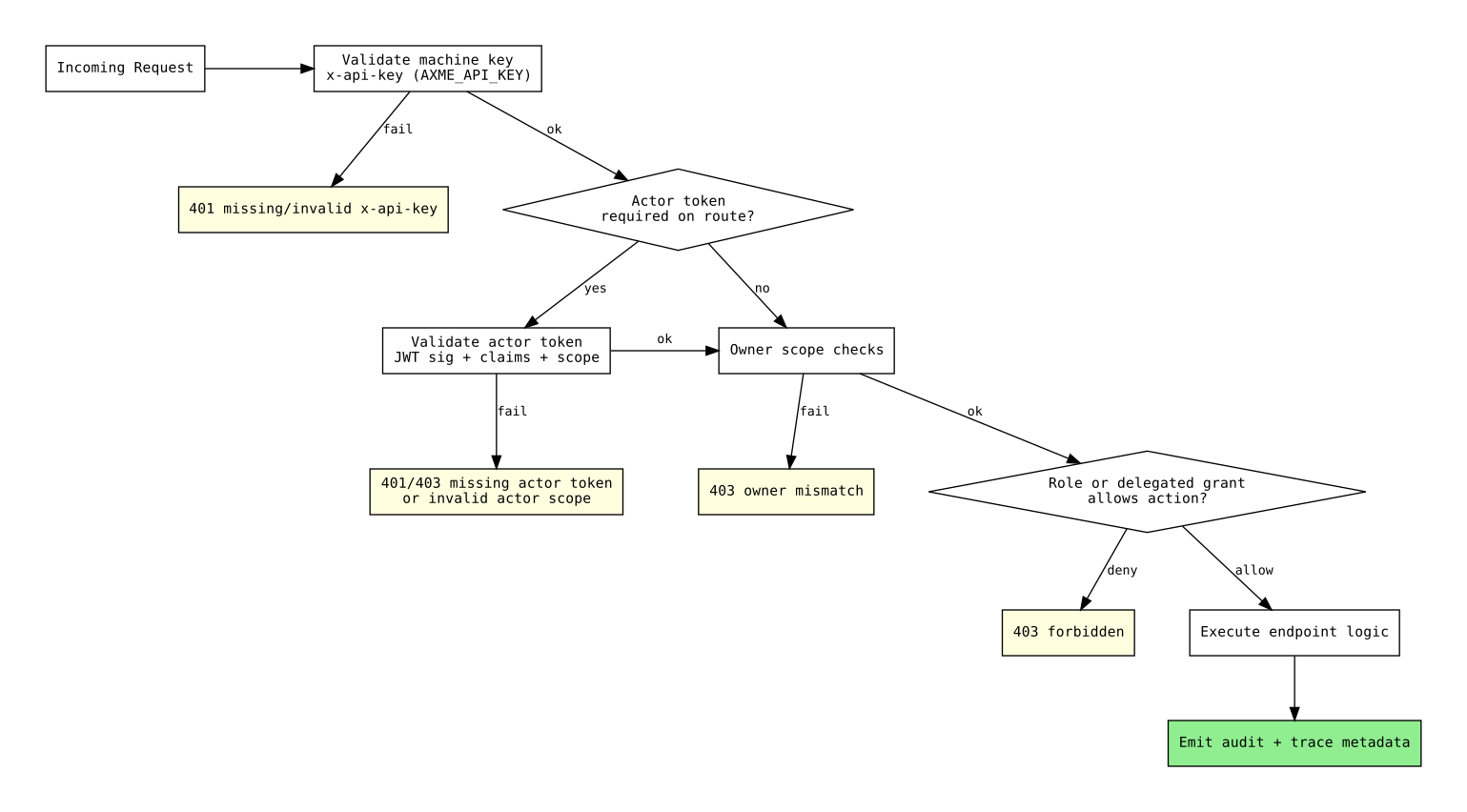
AXME uses a two-layer authentication model for public APIs:
- Machine credential via
x-api-key(AXME_API_KEY, service/workspace identity). - Actor context via
Authorization: Bearer <actor_token>(user/session/delegated context).
For external usage, AXME_API_KEY is typically a service-account key (axme_sa_...) issued by AXME Cloud onboarding. Internal deployment secrets (GATEWAY_API_KEY, AUTH_API_KEY) remain infrastructure-only.
Route classes are explicit:
- Machine routes: require
x-api-key. - Machine + actor routes: require both
x-api-keyandAuthorization. - Interactive/session routes: require
Authorization.
Authentication failures return structured error codes (for example: missing_platform_api_key, missing_actor_token, invalid_actor_scope) to make integration debugging deterministic.
The actor context uses a two-token model:
| Token | Type | TTL | Notes |
|---|---|---|---|
account_session_token |
JWT (signed) | 15 minutes | Sent as Authorization: Bearer on every request |
refresh_token |
Opaque, one-time-use | 30 days | Rotated on each use; old token invalidated immediately |
- The CLI acquires both tokens via the email OTP login flow (
axme login): no password, no API key copying — a one-time code is sent to the user's registered email. - Tokens are stored in the OS-native keychain where available, or in a
~/.config/axme/secrets.json(mode0600) on headless/server environments. - The CLI proactively refreshes the access token when
exp − now < 60 seconds, before the next API request. This avoids reactive 401 errors entirely in normal operation. - If the refresh token expires (30 days of inactivity), the user re-authenticates via OTP — no password needed.
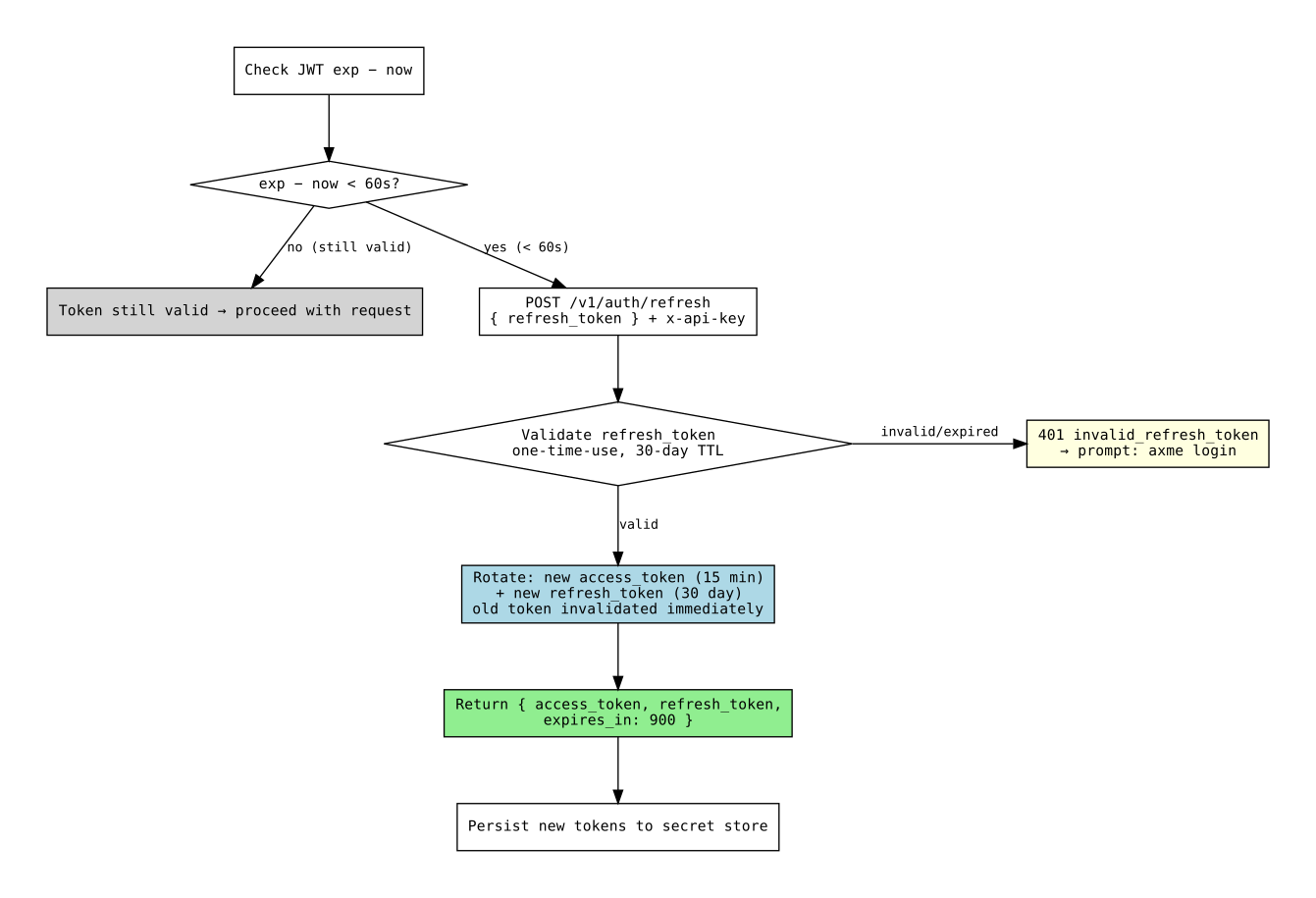
For the full login and token lifecycle sequence, see 08-email-otp-login-and-token-refresh-flow.
- Secrets are never intended to be committed to repositories or embedded in client applications.
- Runtime services load secrets from environment/config providers backed by managed secret stores.
- Key and secret rotation is supported operationally; expired or revoked credentials are rejected fail-closed.
- Access to secret material should follow least-privilege IAM policies and auditable access paths.
- CLI credentials (API key, access token, refresh token) are stored in the OS keychain or a
0600file — never in plainconfig.json.
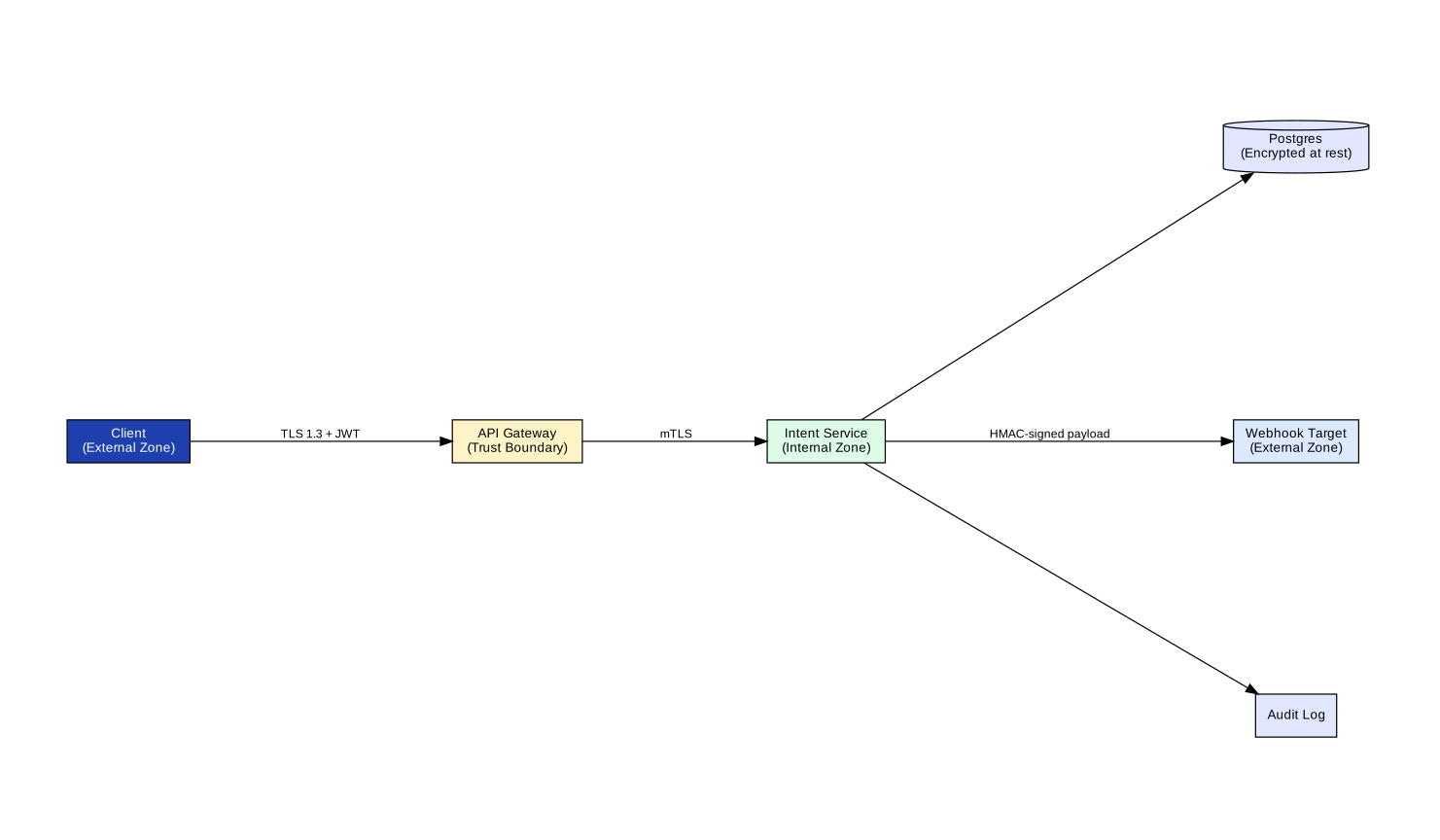
- Public ingress uses HTTPS/TLS.
- Internal service-to-service communication is isolated and authenticated.
- Data at rest is encrypted by managed infrastructure controls.
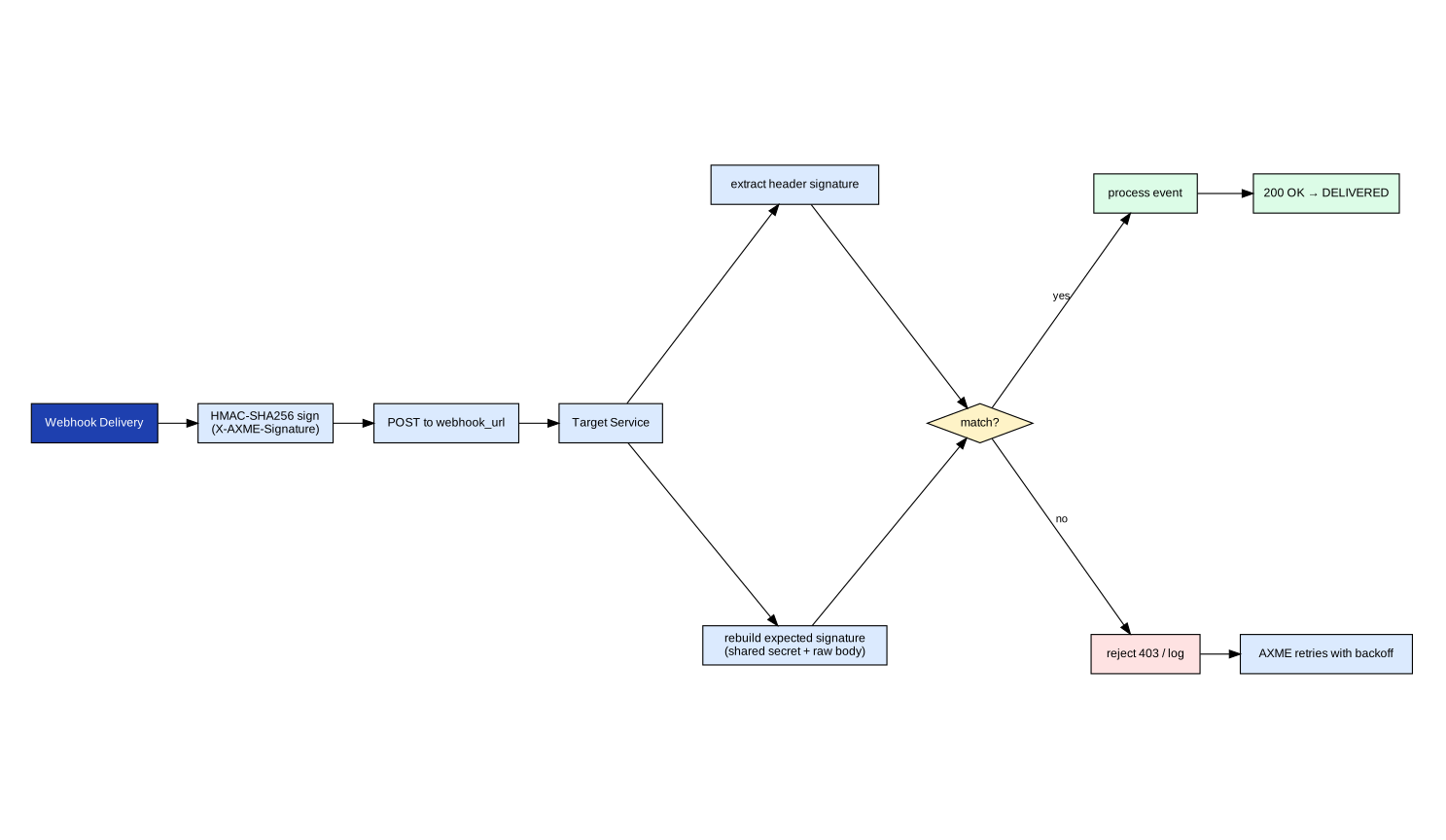
- Outbound callback/webhook channels use request signing so consumers can verify authenticity.
- Security-sensitive events (authentication, authorization, key lifecycle actions) are logged with timestamps and actor context.
- Intent and workflow lifecycle changes are recorded for post-incident analysis.
- Correlation identifiers are used to trace execution across API, runtime, and callback boundaries.
- Authorization is scoped by organization/workspace ownership boundaries.
- Role- and policy-based controls are evaluated before protected operations execute.
- Cross-tenant access is denied by default unless explicitly granted by policy.
- Security reports and responsible disclosure: contact@axme.ai
- High-risk credential events should trigger immediate rotation/revocation workflows.
- Incident handling includes containment, impact analysis, remediation, and follow-up hardening.
AXME is currently in Alpha. Formal attestations/certifications may not be complete yet. The public documentation provides a control-oriented technical baseline to support enterprise security reviews during Alpha evaluation.
Trust boundary map - each enforcement point across the platform:

Public-facing TLS terminates at the gateway. Internal service calls use mTLS. Data at rest is encrypted with AES-256-GCM. Webhook payloads carry HMAC-SHA256 signatures.
Authentication and authorization enforcement flow:

API key verification -> JWT validation -> org/workspace scope check -> role-based access -> resource-level policy grant evaluation. All steps are audited.
public-api-auth.md— full login flow, token semantics, session management endpointssupported-limits-and-error-model.mddocs/diagrams/security/index.md— all security diagrams