Given the root of a binary tree, return the number of nodes where the value of the node is equal to the sum of the values of its descendants.
A descendant of a node x is any node that is on the path from node x to some leaf node. The sum is considered to be 0 if the node has no descendants.
Example 1:
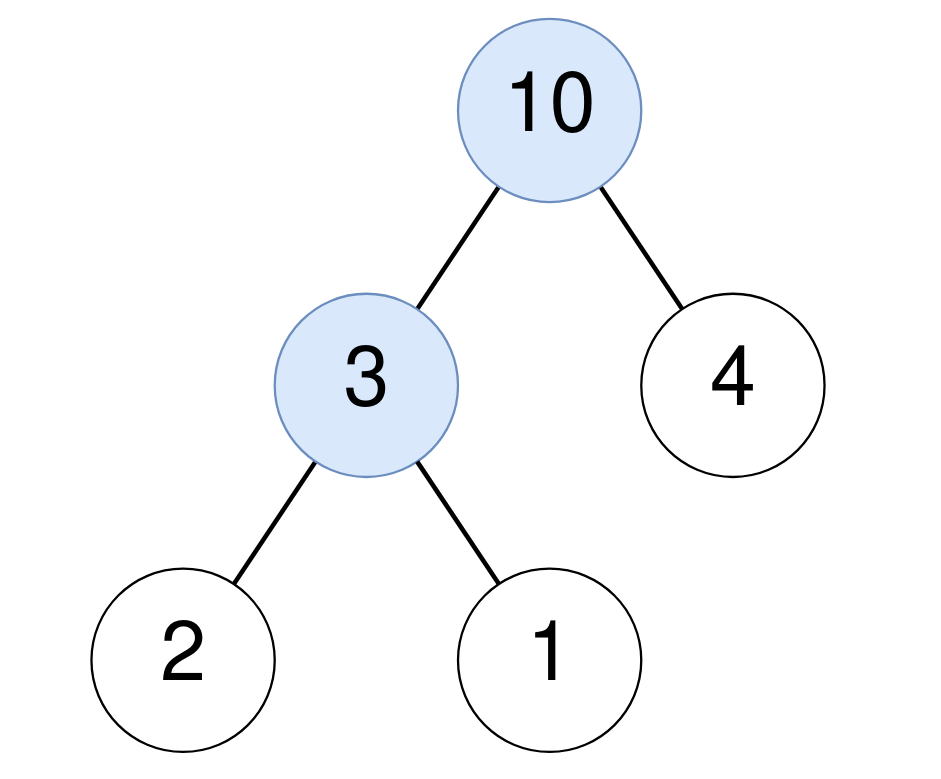
Input: root = [10,3,4,2,1]
Output: 2
Explanation:
For the node with value 10: The sum of its descendants is 3+4+2+1 = 10.
For the node with value 3: The sum of its descendants is 2+1 = 3.
Example 2:
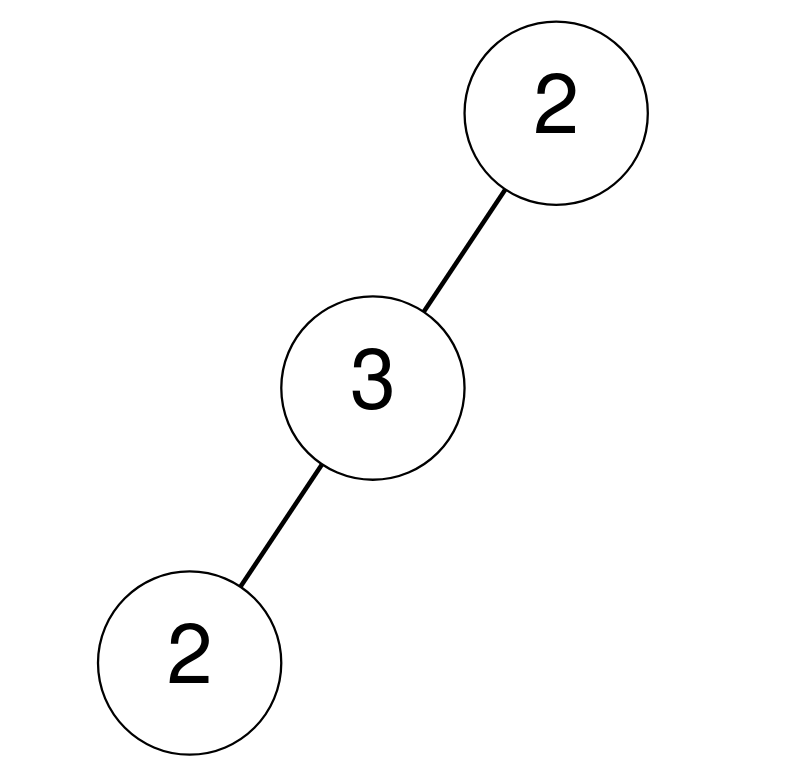
Input: root = [2,3,null,2,null]
Output: 0
Explanation:
No node has a value that is equal to the sum of its descendants.
Example 3:

Input: root = [0]
Output: 1
For the node with value 0: The sum of its descendants is 0 since it has no descendants.
Constraints:
- The number of nodes in the tree is in the range
[1, 105]. 0 <= Node.val <= 105
Companies:
Facebook
Related Topics:
Tree, Depth-First Search, Binary Search Tree, Binary Tree
Similar Questions:
// OJ: https://leetcode.com/problems/count-nodes-equal-to-sum-of-descendants/
// Author: github.com/lzl124631x
// Time: O(N)
// Space: O(H)
class Solution {
    int ans = 0;
    long dfs(TreeNode *root) {
        if (!root) return 0;
        long sum = dfs(root->left) + dfs(root->right);
        if (root->val == sum) ++ans;
        return sum + root->val;
    }
public:
    int equalToDescendants(TreeNode* root) {
        dfs(root);
        return ans;
    }
};