Field of View Calculation Verification Test
This document presents the results of a verification test comparing the theoretical calculations of field of view (FOV) with actual photographs taken with various focal lengths.
- Camera: Full-frame CMOS (36mm × 24mm sensor)
- Focal lengths tested: 16mm, 20mm, 24mm, 28mm, 35mm
- Test target: Standard calibration chart
- Distance: Fixed position (approximately 400mm from sensor plane)
- Alignment: Center-aligned composition
Our theoretical calculations predict specific field of view angles for each focal length. When compared with actual photographs, we observed that real-world images consistently show slightly wider fields of view (approximately ±2% difference). This small deviation is normal and can be attributed to several factors:
- Lens manufacturing tolerances
- Focus breathing effects
- Lens distortion (especially in wider focal lengths)
- Nominal vs. actual focal length differences
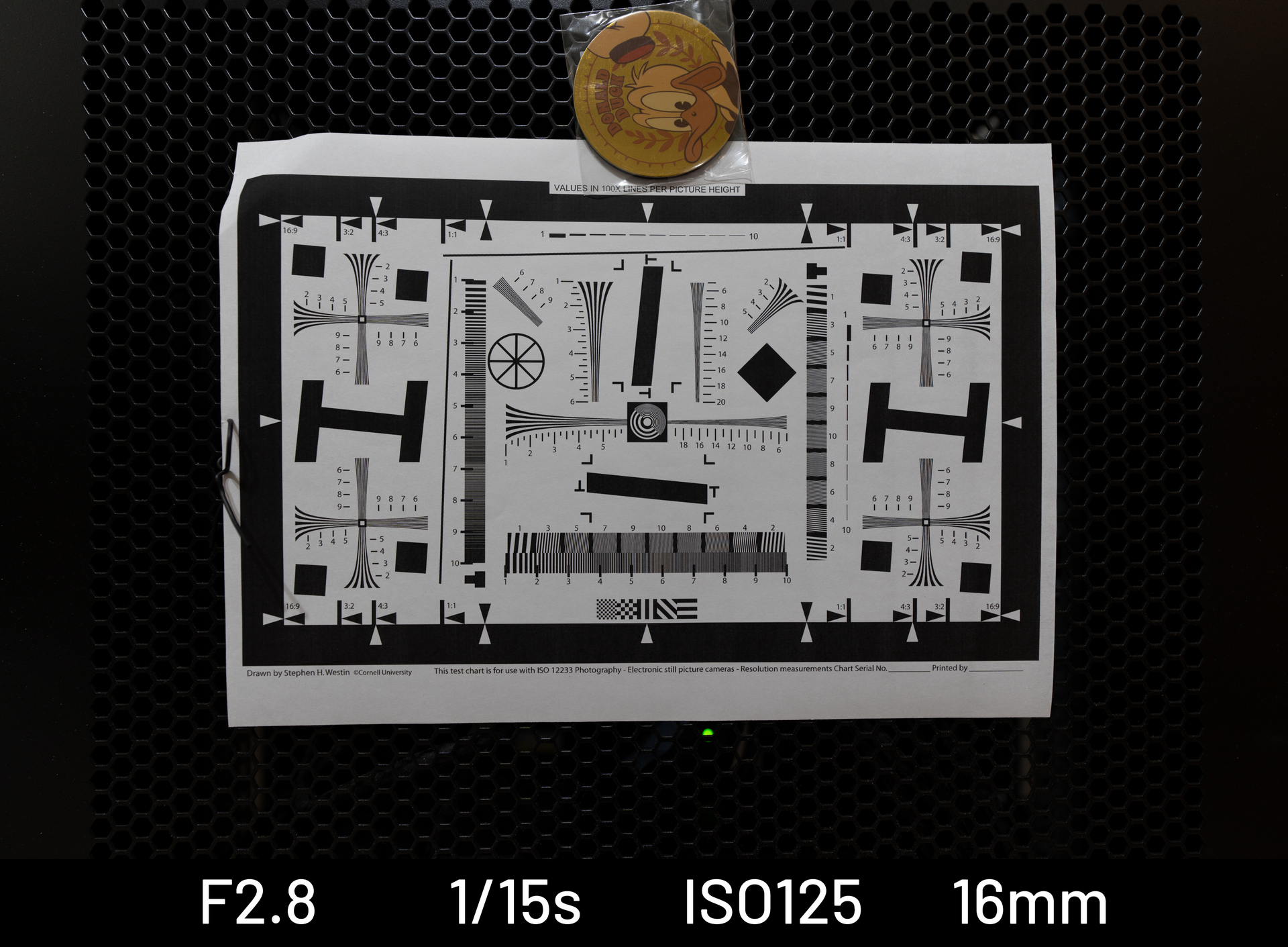
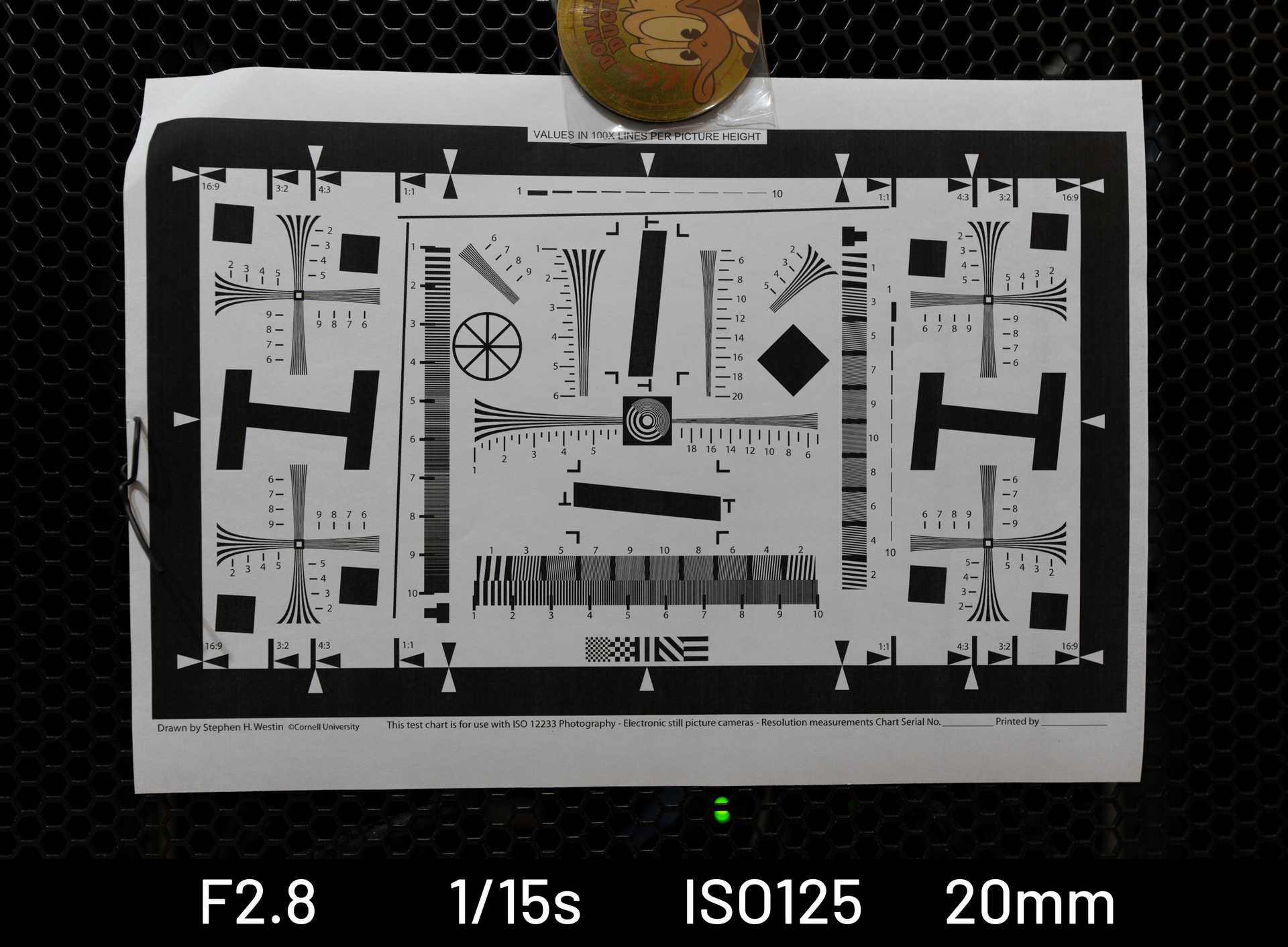
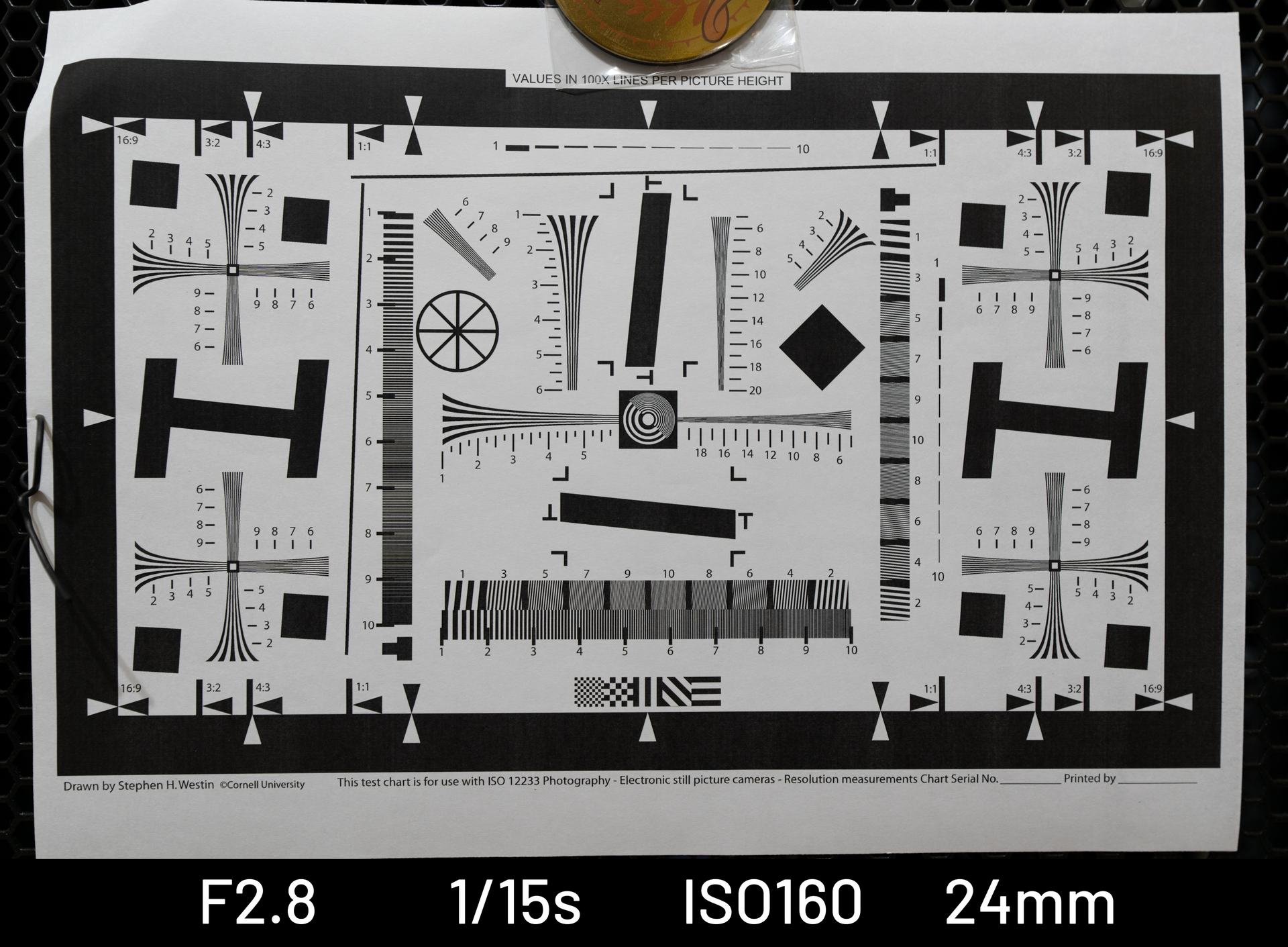
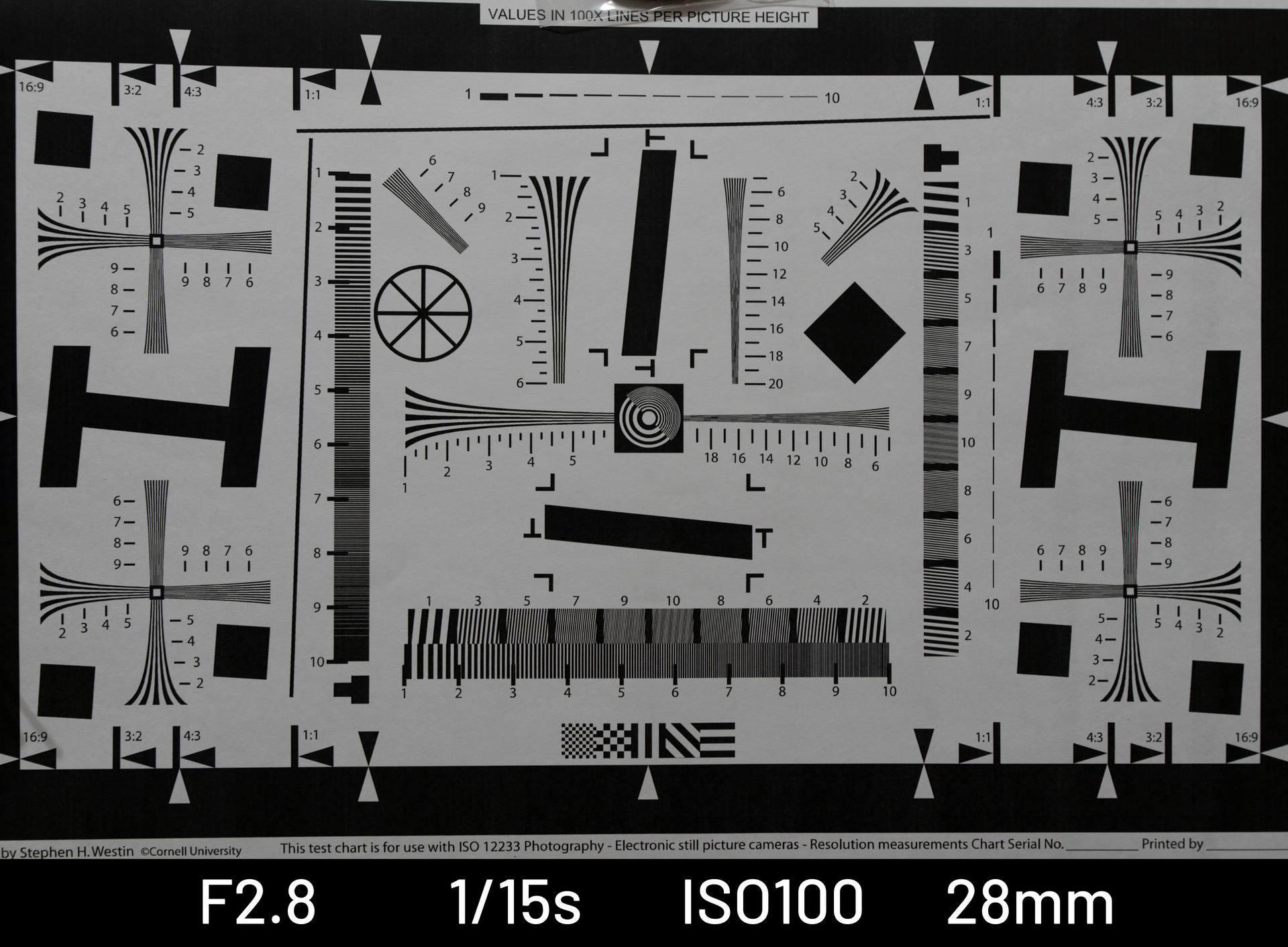
Below are the comparison photographs showing the actual field of view at each focal length:
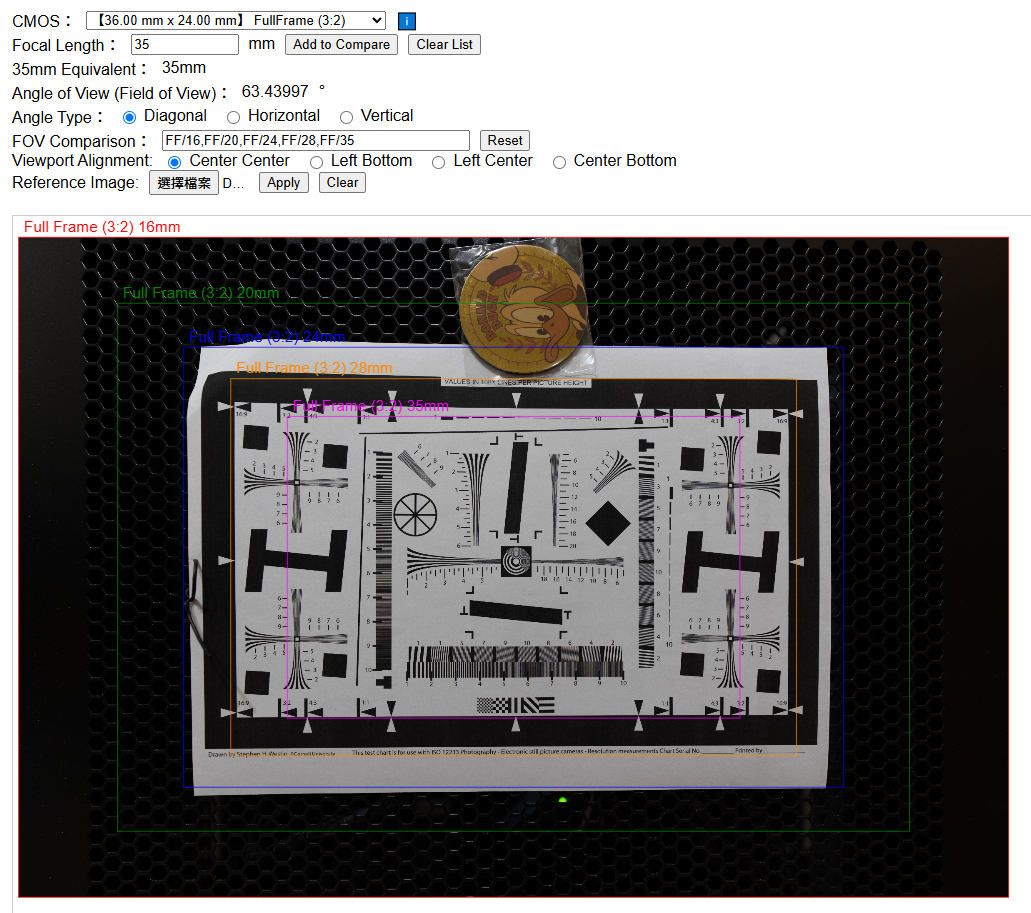
Test chart with calculated FOV overlays
The colored rectangles represent the theoretically calculated field of view for different focal lengths:
- Red: 16mm
- Green: 20mm
- Blue: 24mm
- Orange: 28mm
- Magenta: 35mm
| 16mm | 20mm | 24mm |
|---|---|---|
 |
 |
 |
| 28mm | 35mm | |
 |
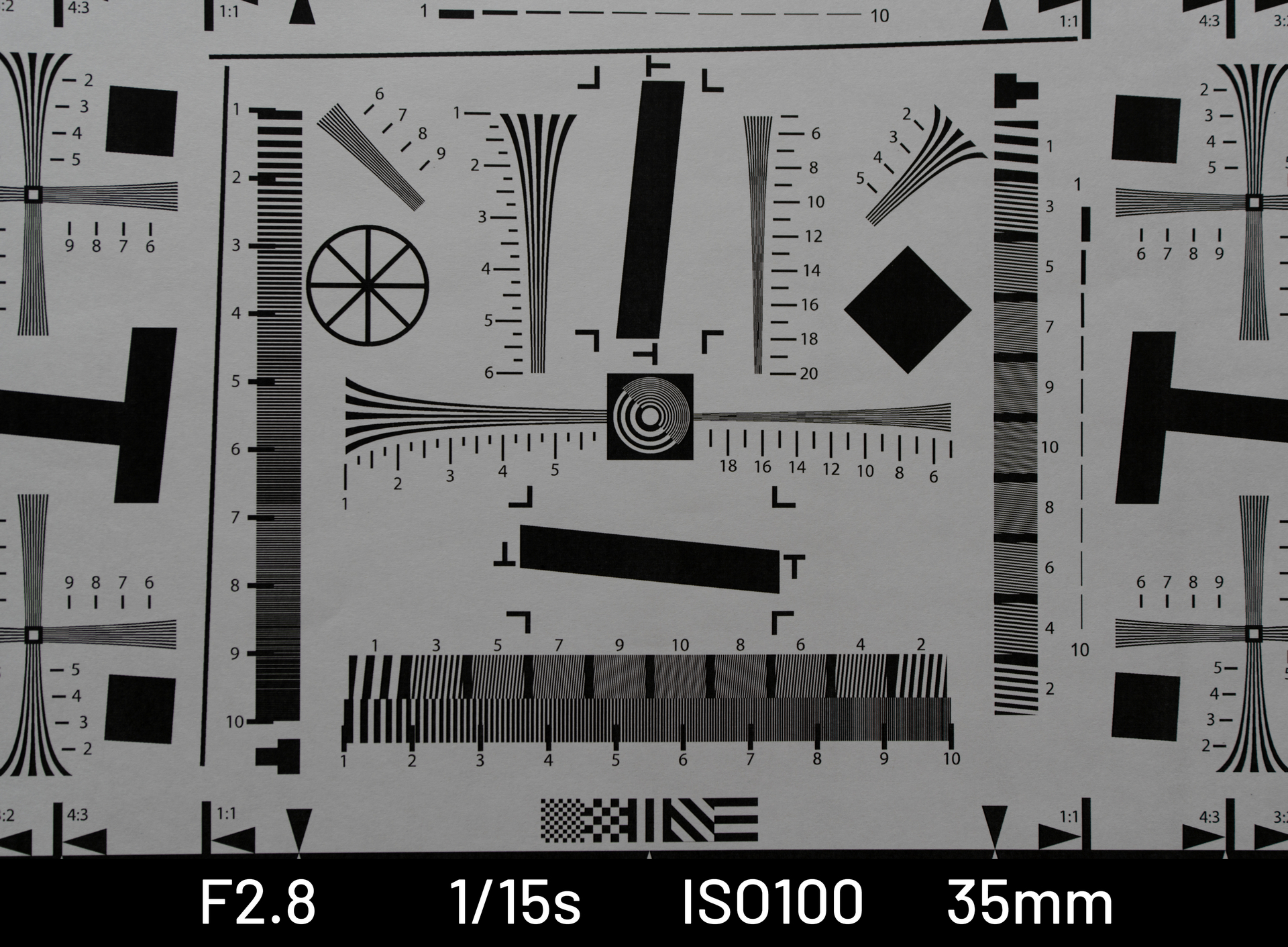 |
When examining the photographs and comparing them with the calculated field of view overlays, we observe a consistent pattern where the actual field of view is approximately 1.5-2% wider than theoretical calculations predict. This means real-world photographs capture slightly more of the scene than pure mathematical models would suggest.
This is a normal phenomenon in optical systems and doesn't indicate a problem with the calculations. Rather, it reflects the complex reality of real optical systems compared to simplified mathematical models.
For most photography purposes, the theoretical calculations provided by the Lens Angle View Calculator are highly accurate and reliable for planning purposes. The small deviation observed falls well within acceptable tolerances for practical photography and cinematography work.
When absolute precision is required (e.g., technical photography, photogrammetry), users may want to consider applying a small correction factor to account for this consistent deviation, or conduct specific calibration tests for their particular equipment.
The Lens Angle View Calculator provides accurate field of view calculations that closely match real-world results with a slight deviation of approximately ±2%. This level of accuracy is excellent for the vast majority of photography and cinematography applications.
The verification test confirms that photographers and cinematographers can confidently rely on these calculations for planning shots, understanding lens coverage, and making equipment decisions.