Your best ally for easily building responsive web applications:
Build your interface in one single resolution, and let the package take care of the rest, scaling your sizes, paddings, margins, font-sizes, and more for all desktop resolutions
It works with a single line of execution, and has great synergy with any library or framework that uses the rem unit
ui-scaler will make sure your app proportions and relative sizes are the same across all desktop resolutions. The effect is most recognized in higher screen resolutions:
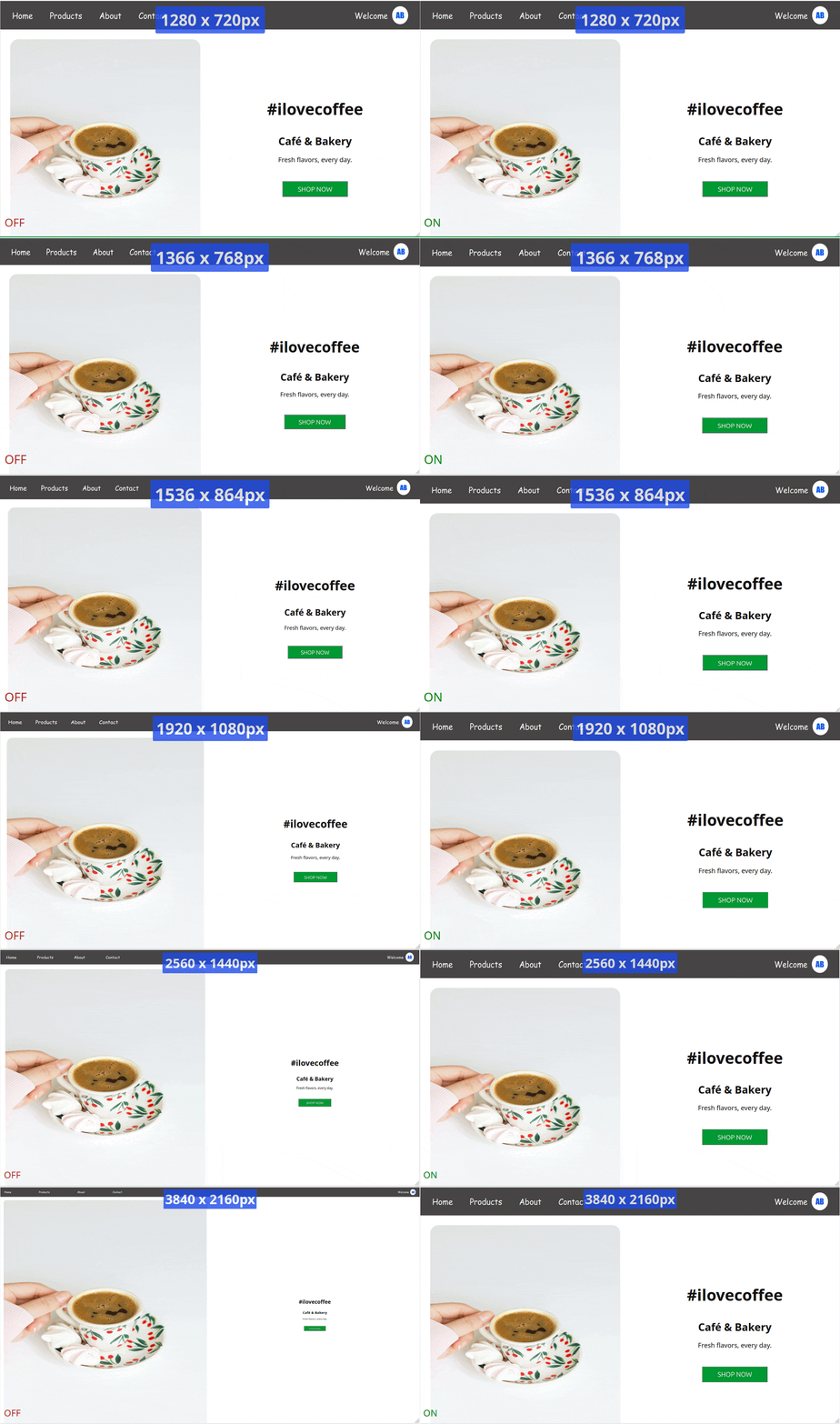
You will also notice an easier experience when adjusting the UI for portrait or mobile resolutions, since all elements proportions will look good, leaving to you just the effort of repositioning and realigning the elements
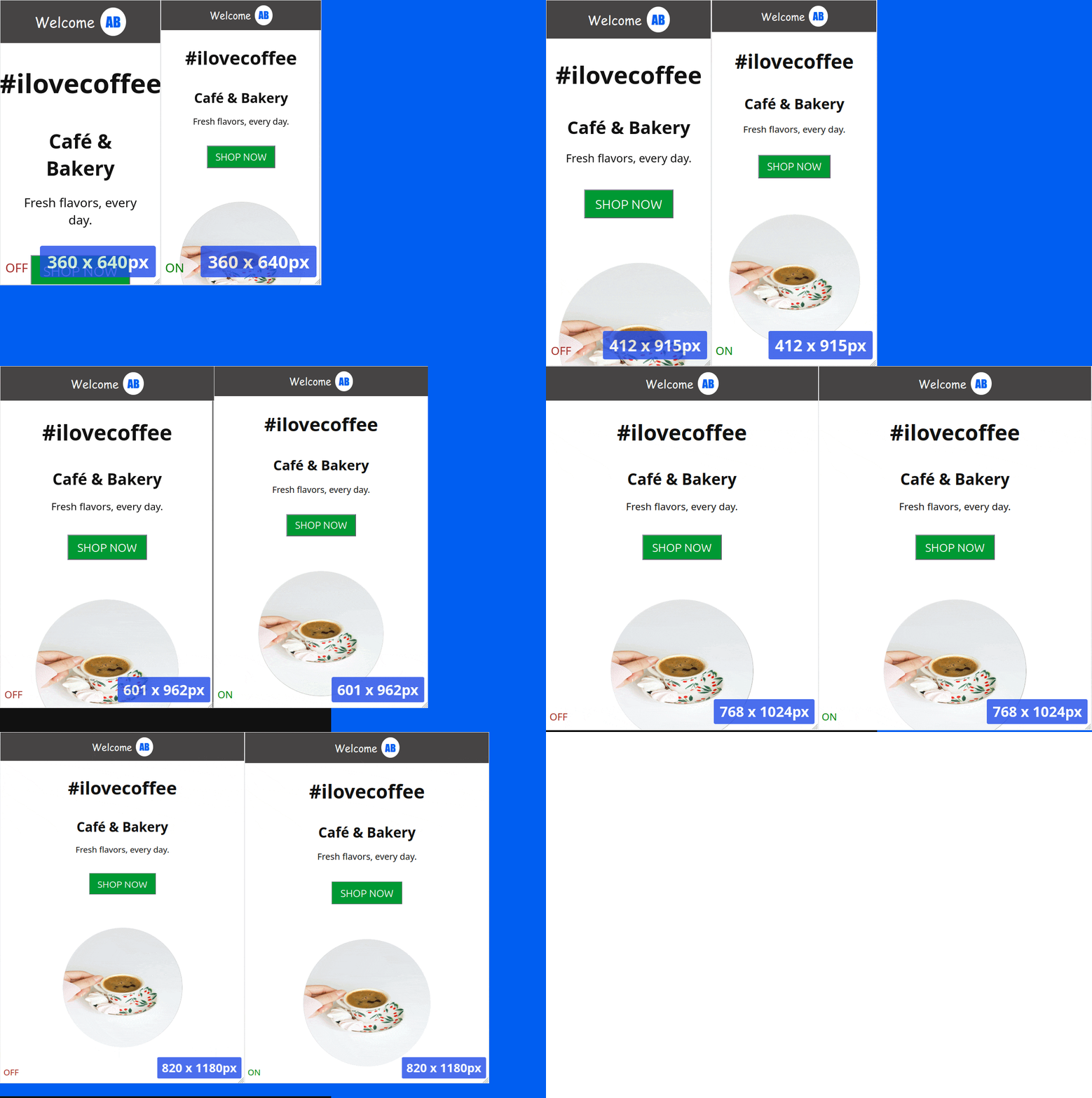
You don’t need to waste time checking or adjusting your interface across different desktop screen resolutions — it will look virtually the same on all of them.
There are two usage methods:
npm i ui-scaler
Then in your app entry point:
// main.js|ts
import scaleUI from 'ui-scaler'

...

// last line
scaleUI()Add to your index.html:
<head>
  <script src="https://cdn.jsdelivr.net/npm/ui-scaler@1.0.5/dist/browser-bundle.min.js"></script>
</head>A script will be added to your app, which:
- Has 8kb
- Runs once the document is ready
- Adds a window resize event listener that updates the HTML element font-size, based on the screen resolution, and the browser font-size
- Optionally, adds styles transformation logic that convert pixel values to rem values (see how to activate below)
Notice your app HTML font-size to be different in each screen resolution
All properties with rem values will respond, and adjust accordingly
Font-size styles take in consideration the user browser font-size definition, so we have a web accessible compliant solution
You can pass an argument to the scaleUI(boolean | TransformPixelsOptions) method, instructing the script to attempt to convert pixel values to rem:
The script will try to convert all document pixel styles to the respective rem definition
// main.ts
import scaleUI from 'ui-scaler'

...

scaleUI(true)The script will try to convert all document pixel styles to the respective rem definition, excluding border-radius attributes, and elements with myCustomId id or my-custom-class class
// main.ts
import scaleUI from 'ui-scaler'

...

scaleUI({
  excludeAttributes: ['border-radius'],
  excludeSelectors: ['#myCustomId', '.my-custom-class']
})You can also add the ignore-ui-scaler class to any HTML element so the script transformations do not have effect. Example:
<style>
.width-300 {
  width: 300px;
}
/* Auto-generated class definition - done by the transformation script */
.width-300:not(.ignore-ui-scaler) {
  width: 18.75rem;
}
</style>

<div class="width-300 ignore-ui-scaler">
  My width will remain in pixels!
</div>In case you are using the <script src="..."></script> installation method, and want to transform pixels, you can add a
data-ui-scaler-opts attribute to your HTML tag element:
<html data-ui-scaler-opts="true">
...
</html>
or
<html data-ui-scaler-opts="{ excludeAttributes: ['border-radius'] }">
...
</html>