Utilities, world downloads, schematics for my Minecraft Computers and CPUs
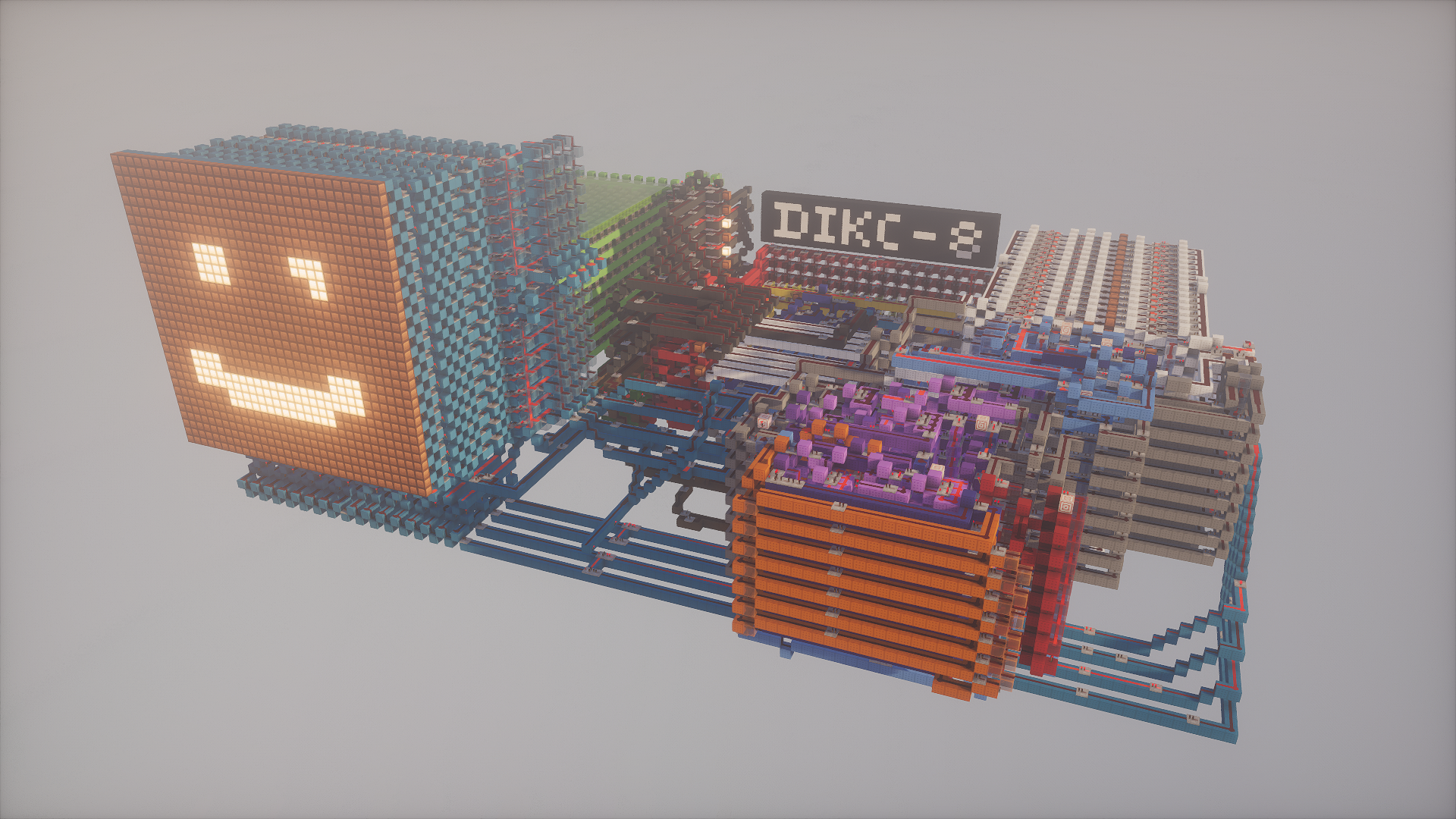
Working computer, with built-in screen and a limited range of operations. Designed while having basically no knowledge of how computers actually work...
- Program
- 256B ROM, or 128 2B instructions
- Reads 1 instruction into a buffer at 10Hz speed
- 16 possible instructions (1 unused)
- Conditional jump
- Memory
- 16 registers
- 8 "boolean" registers (storing bit by bit)
- I/O
- Built-in 16x16 screen
- Computing
- ALU with addition, subtraction, multiplication, division and comparisons
- Clock stalls during costly operations like multiplication and division
- Separate LU for boolean logic with the boolean registers
- Misc
- Word size of 8 bits
- Limited pipelining
- 91-tick clock (0.11Hz)
- Serial observer rom (so not MCHPR compatible)
- Python simulator
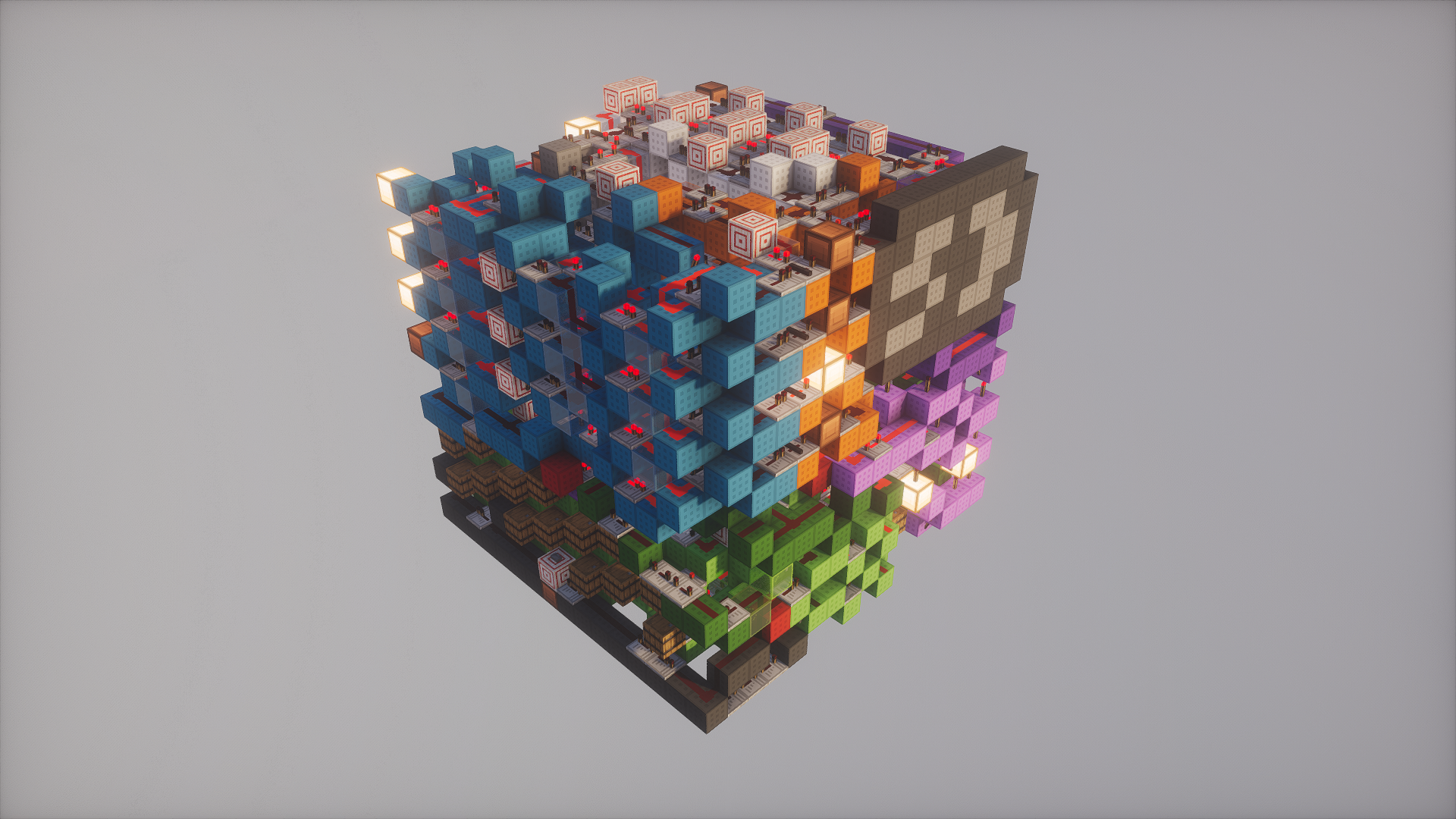
A small project for a small CPU, which fits in a 16x16x16 area! Unfortunately not Turing-complete, as there was no space to implement conditional branching.
- Program
- 8B analog ROM, or 8 1B instructions
- 7 possible instructions (1 unused)
- Memory
- 3 registers
- I/O: None
- Computing
- ALU with addition, subtraction. Saves in dedicated buffer for future use.
- Misc
- Word size of 4 bits
- The limited number of instructions can be circumvented by not adding a HLT instruction and letting the program loop
- 50-tick clock (0.2Hz)
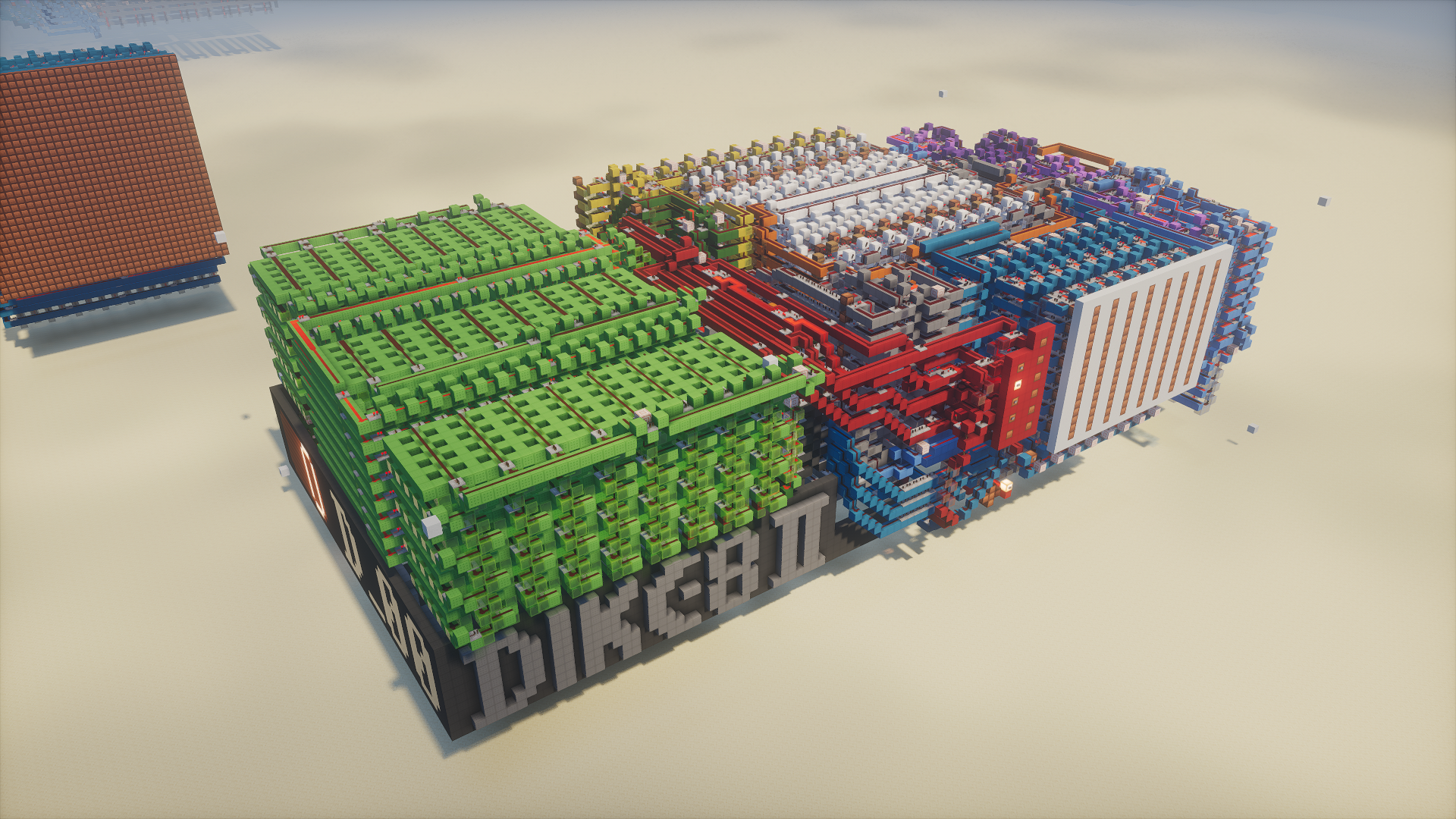
A revamp of the DIKC-8 in every aspect. It had a major focus on speed and pipelining, which actually ended up killing the project. As I wanted to add new features, more components, this speed constraint was an added complexity that made it harder to debug.
Additionally, as I learned more about computer architecture, I became aware of the many design flaws in the DIKC-8 2. This ultimately made me abandon the project and start over, hence the second generation.
- Program
- 1KB ROM, or 512 2B instructions
- Reads 1 instruction into a buffer at 10Hz speed
- 32 possible instructions
- Conditional and unconditional jump
- Memory
- 32 registers
- Buffer for immediate values before writing them to a register
- 10-deep call stack
- I/O
- 8 1B ports that can be written to, read from, or pulsed (quickly turn on and off again in one single instruction)
- Outputted 1B ALU result
- Computing
- ALU operations are stored in dedicated 1B buffer and comparisons in a 1-bit buffer
- ALU with addition, subtraction, comparisons, most bitwise operations and bit shifts
- Bitwise operations possible outside the ALU: set or unset a bit, use a bit as the condition for the next conditional jump
- Misc
- Word size of 8 bits
- Serial ROM for compactness, but split into multiple sections for speed
- For operations like jumps or division, which take multiple cycles, it is
possible to run some operations while waiting for the first to finish.
For example,
LDI ...; JMP ...; NOPcan be made faster by runningJMP ...; LDI ...instead. - 33-tick clock (0.3Hz)
Warning
This computer is nonfunctional and discontinued.
Although I spent a lot of time refining it, the assembly took too much effort
and its various issues / oversights made it easier to start over, hence the
second generation.
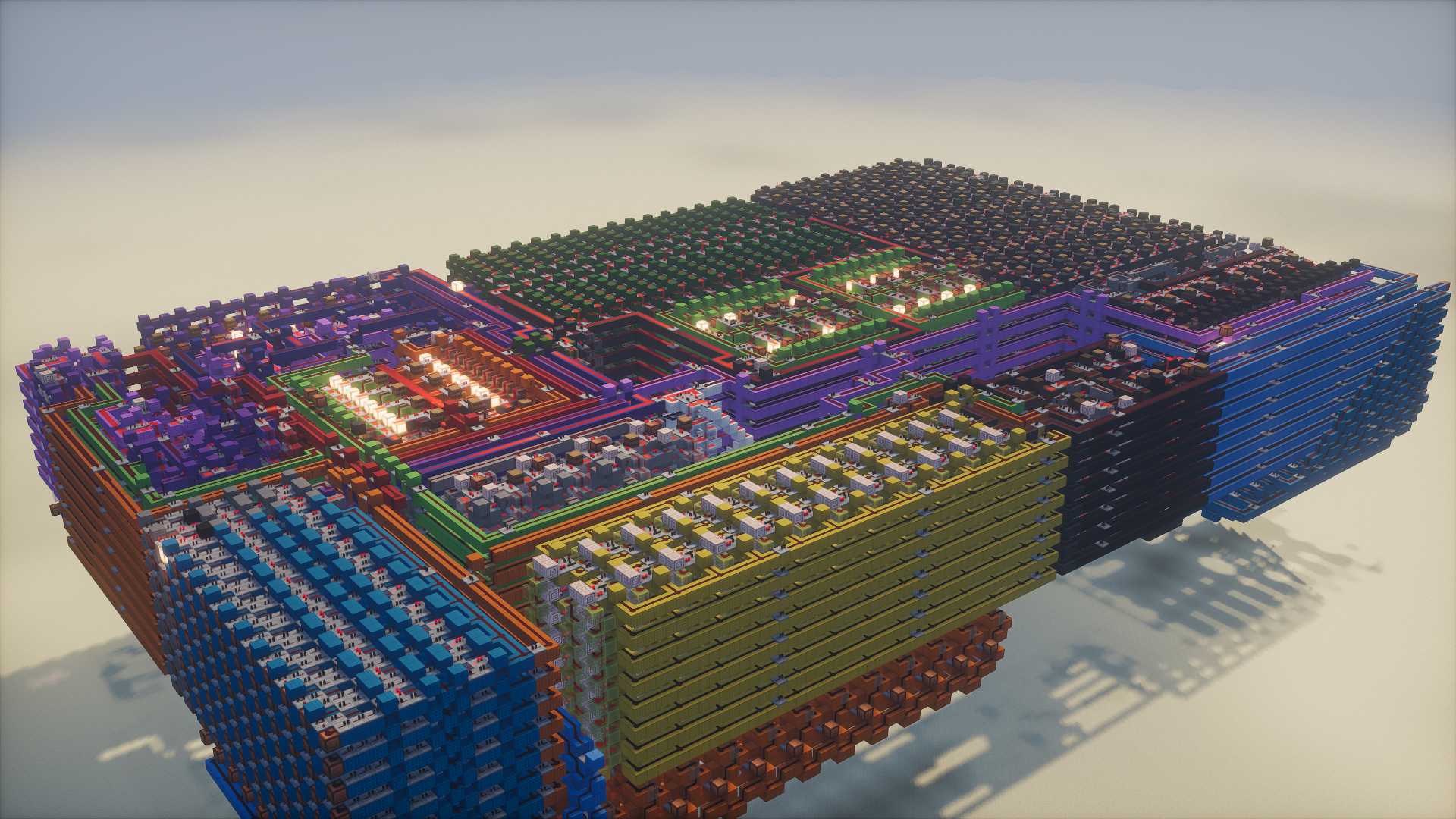
Born from the ashes of the DIKC-8 2. Made to be better in every way, incorporating some of my fresh knowledge on computer architecture.
The main motivation for its specs was to make it run Tetris, or even a custom operating system.
Note
This computer is currently under creation, most of the following specs are subject to change.
- Program
- 1KB built-in analog ROM, or 512 2B instructions
- Support for up to 128KB external rom, or 65K instructions
- 16B decoded instructions cache
- Memory
- 8 registers with simulated dual-read. Can be used as pointers.
- 16B cache, split into 2 modules to implement LRU. Sole interface between the registers and the RAM. Can read and write one address at a time, or in bulk.
- 256B RAM, stored as serial for compactness
- 12-deep call stack
- I/O
- 10 1B readable and writable ports
- 2 reserved output ports (for the ALU buffer and state register)
- PC readable from the outside
- Plug-in external ROM (see ROM section)
- Computing
- ALU with addition, subtraction, all bitwise operations, bit shifts and barrels
- Big math units for multiplication and division
- State register for use in conditional jumps: zero, nonzero, carry, ALU overflow, stack overflow and underflow, constant 1, constant 0
- Conditional absolute and relative jumps
- Misc
- Word size of 8 bits
- 32 possible instructions (1 unused)
- Most components notice the caller when they are done, to reduce timing errors and make debugging easier
- Full web emulator
Warning
Just to be clear, DIKC stands for "D_00's Incredible Keyboardless Computer".
Same with PUSSI which means "Powerful Unit for Smart Systems of Information".